



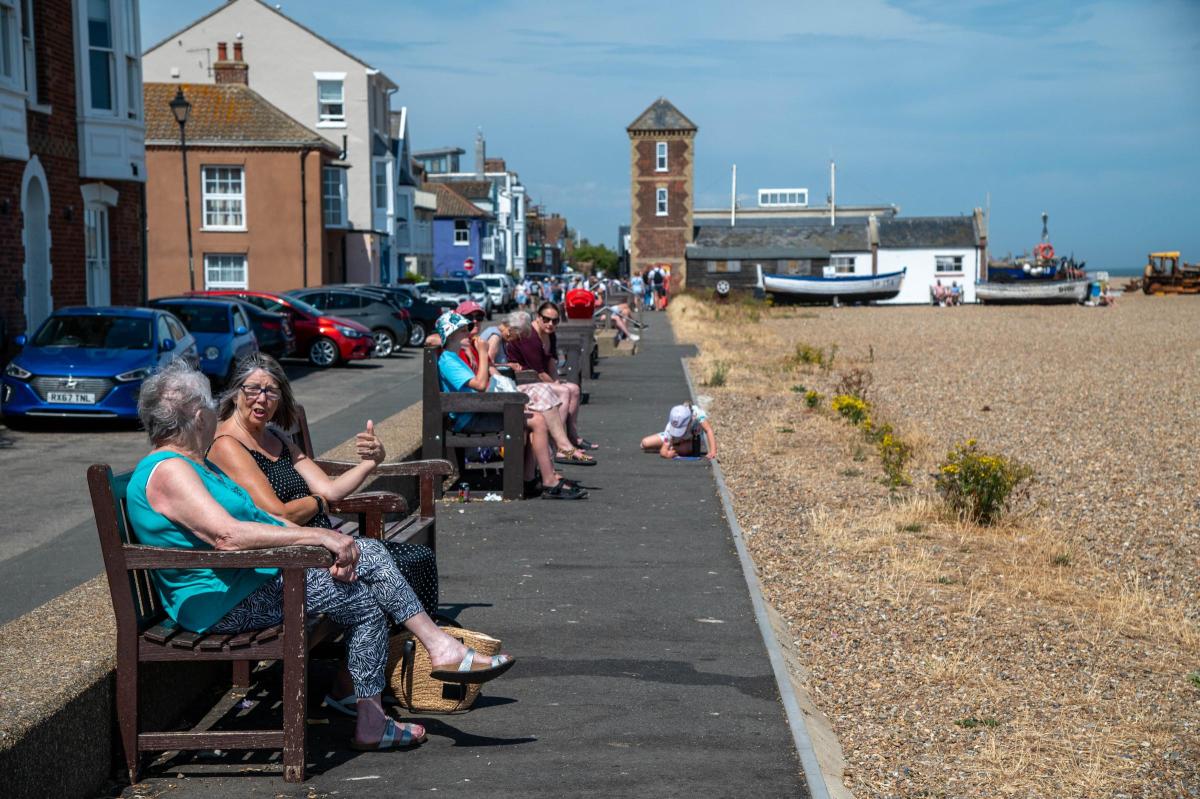

Temperatures could soar to 34C or higher in Suffolk as the Met Office considers issuing rare amber or red extreme heat warnings.
Parts of the UK, including Suffolk, are bracing for their fifth heatwave of the summer, during what forecasters have described as an "exceptional" season of hot, dry weather.
Tom Morgan, meteorologist at the Met Office, said: "We’ll probably see highs reaching the mid-30s quite widely on Wednesday, and indeed on Thursday too for England and Wales.
"But Thursday at this stage looks the most likely hottest day of the week."
The UK Health Security Agency has issued yellow heat health alerts for the East Midlands, West Midlands, South East, South West, East of England, Yorkshire and the Humber and London.

These alerts remain in place until 9pm on Tuesday but are expected to be extended.
However, Mr Morgan explained: "We also sometimes issue extreme heat warnings, amber and red warnings, which we did back in June, so that’s under consideration at the moment."
Newmarket is set for the hottest temperatures in Suffolk this week, with 34C expected on Thursday.
Bury St Edmunds and Haverhill will experience highs of 33C on Thursday.
However, some parts of Suffolk are due to record their hottest temperatures this week on Friday.
READ MORE: Essex and Suffolk Water issue update on hosepipe ban
Hadleigh will peak at 33C on Friday, as will Sudbury and Eye. Ipswich will see highs of 32C on Friday.
It will be cooler in the coastal areas, with Southwold, Aldeburgh and Felixstowe all due to remain under 30C this week.
This follows what has already been a record-breaking summer, with Sunday marking the 34th day this year that temperatures exceeded 30C somewhere in the UK – matching the record set in 1995.
So far, summer 2026 has seen two heatwaves in May and June that led to more than 2,800 excess deaths.
Another two heatwaves in July contributed to drought and wildfires during the driest July in England and Wales since records began in 1836.


Share